
Buying property in Dubai for the first time is a significant milestone that requires a blend of market awareness and financial precision. From navigating the latest legal procedures to selecting the right neighborhood, first-time buyers need a clear roadmap to success. This 2026 guide provides practical tips, expert advice, and updated strategies to help you make informed decisions and secure a valuable property investment in the city.
Dubai’s real estate market in 2026 has entered a phase of maturity, characterized by sustainable growth and enhanced buyer protections. First-time buyers must understand current market trends, such as the rise of “green” sustainable communities and the stabilization of mid-market prices. Understanding the legal framework, financing options, and the importance of real estate developers reputation is essential to ensuring a smooth and secure purchase process.
As Dubai moves through 2026, the market has transitioned from a period of rapid acceleration to a more mature, stable environment. For first-time buyers, this shift offers a unique advantage: the ability to make decisions based on long-term liveability and infrastructure rather than short-term market hype.
In 2026, the “location, location, location” rule remains the most critical factor, but the definition of a prime location has expanded. Beyond the established hubs of Dubai Marina and Downtown, first-time buyers are finding exceptional value in emerging districts.
Dubai’s regulatory environment is highly transparent, but it requires strict adherence to specific steps. As a first-time buyer, you should be aware of the “Freehold” versus “Leasehold” distinction. Most expats focus on Freehold areas, where they can have 100% ownership of the land and the structure.
Many first-time buyers focus solely on the sticker price and overlook the “hidden” transaction costs. In 2026, these additional fees can add approximately 7% to 8% to the total purchase price.
| Cost Item | Estimated Amount |
| DLD Registration Fee | 4% of Property Value |
| Agency Commission | 2% + VAT |
| Trustee Office Fee | AED 4,200 (approx.) |
| Mortgage Registration | 0.25% of Loan Amount |
| Property Valuation | AED 2,500 – AED 3,500 |
The 2026 market is dominated by developers who prioritize quality and timely delivery. For a first-time buyer, choosing an unproven developer can be risky.
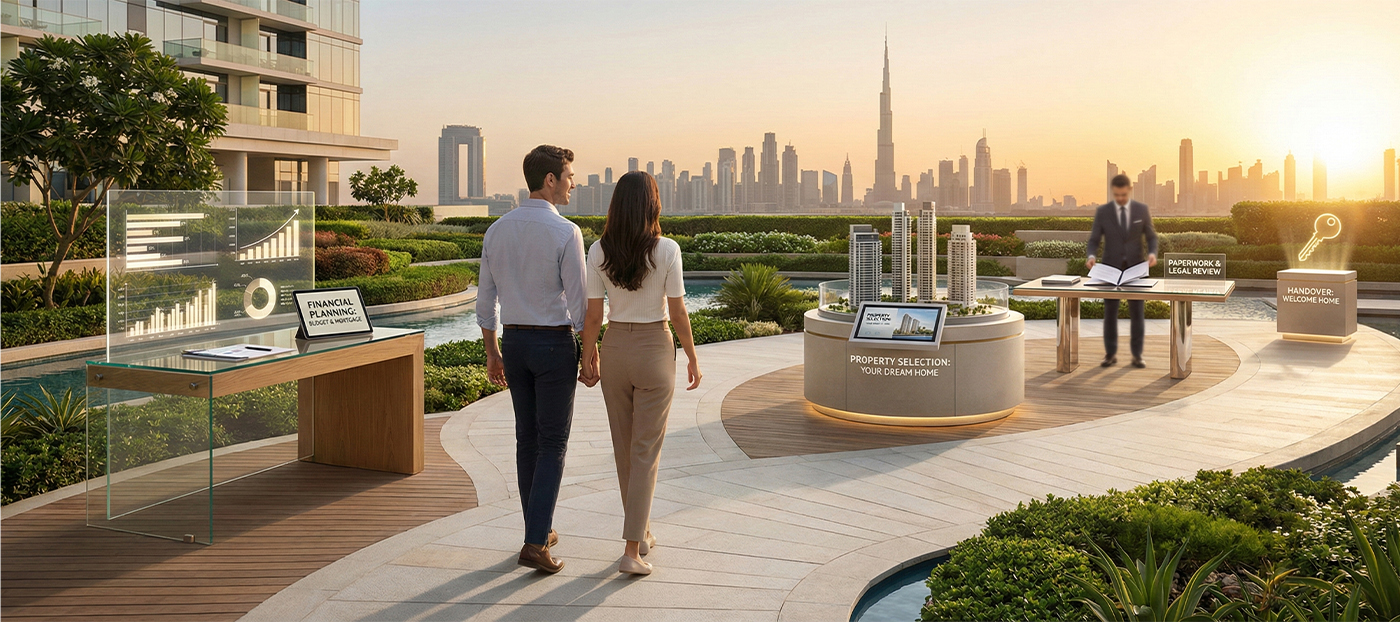
Before you start viewing properties, secure a mortgage pre-approval. In 2026, UAE banks typically require a minimum monthly salary of AED 15,000 for mortgage eligibility.
For ready properties, never skip a professional snagging inspection. Even luxury apartments can have latent defects in plumbing, AC units, or electrical wiring. Spending a few thousand Dirhams on a professional report can save you tens of thousands in future repairs.
Last year, a young professional couple shifted from renting in Downtown to purchasing a one-bedroom apartment in Jumeirah Village Circle (JVC). By utilizing the Dubai First-Time Home Buyer Program launched in 2025, they secured a lower interest rate and a staggered payment plan for their DLD fees. Their mortgage payments are now roughly equal to their previous rent, but they are now building equity in a high-demand area.
An expat resident purchased an off-plan studio in Dubai South specifically to take advantage of the 1% monthly payment plan. By the time the property is handed over in late 2026, the surrounding infrastructure expansion is expected to have increased the property’s value by an estimated 15%, providing an immediate capital gain.
| Factor | Buying (2026) | Renting (2026) |
| Financial Goal | Equity Building & Asset Growth | Monthly Expense / No Return |
| Upfront Cost | High (20-25% of value) | Low (Security deposit + 1st month) |
| Monthly Cost | Mortgage & Service Charges | Monthly Rent & DEWA |
| Stability | Protection from rent hikes | Vulnerable to market fluctuations |
| Flexibility | Moderate (Requires sale/lease) | High (Annual contracts) |
The 2026 Dubai property market offers a unique window of opportunity for those prepared to move from renting to owning. By understanding the total costs, securing your financing early, and focusing on quality developers, you can turn your first home purchase into a foundation for long-term wealth.
Q1. What is the minimum down payment for property in Dubai?
For expatriate first-time buyers, the minimum down payment is typically 20% of the property value for homes priced below AED 5 million. For UAE Nationals, this can be as low as 15%.
Q2. Are there restrictions for first-time buyers in Dubai?
There are no major restrictions on who can buy, provided you choose a property in a “Freehold” area. However, financing eligibility depends on your residency status, credit history, and monthly income.
Q3. How do I avoid scams in the Dubai property market?
Always verify that your real estate agent is RERA-certified and that the developer has an active escrow account for the project. Never transfer funds directly to an individual’s personal bank account; all official transactions should be documented through the Dubai Land Department systems.
Q4. What is the first-time home buyer scheme in Dubai?
The Dubai First-Time Home Buyer Program, introduced in mid-2025, offers eligible residents priority access to certain developments, potential discounts on registration fees, and preferential mortgage rates through participating banks like Emirates NBD.
Q5. What is the minimum salary to buy a house in Dubai?
Most banks require a minimum monthly salary of AED 15,000 to qualify for a home loan. However, to comfortably afford a mid-range apartment (approx. AED 1.5M), a household income of AED 30,000 to AED 40,000 is recommended.
Q6. What is the AED 750,000 property visa?
If you purchase a completed residential property worth AED 750,000 or more, you are eligible for a 2-year renewable investor visa. This allows you to reside in the UAE and sponsor your family. For properties over AED 2 million, you may qualify for the 10-year Golden Visa.