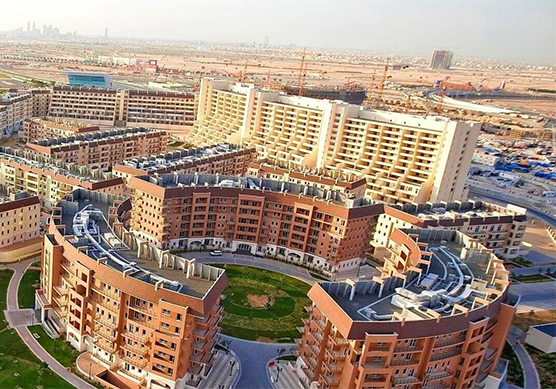


In the UAE’s 2026 real estate market—where off-plan launches, AI-generated renders, and influencer-backed campaigns dominate timelines—buyers are no longer rewarded for belief. As transaction volumes rise and regulatory oversight tightens, verified delivery history has replaced branding as the market’s true differentiator.
This guide helps UAE buyers and investors separate promotional storytelling from provable execution, using government-backed data, post-handover performance, and financial transparency to make lower-risk, higher-conviction decisions.
A company’s track record reflects what has actually been delivered in the UAE market—not what is promised. This includes documented handover timelines, escrow compliance, audited financial stability, and how completed projects perform after residents move in.
Marketing, by contrast, controls perception: glossy renders, VR walkthroughs, celebrity endorsements, and innovation claims that often disappear once construction begins. In the UAE, where buyers commit capital years before completion, only execution history—not creative presentation—predicts outcome.
In Dubai and Abu Dhabi—markets driven by international investors, regulated escrow systems, and phased off-plan delivery—verifiable developer history materially reduces downside risk. Official records expose patterns buyers cannot see in brochures: average construction overruns, frequency of delayed handovers, post-handover maintenance quality, and long-term service charge behavior. These indicators consistently separate delivery-focused developers from marketing-led entrants.
By 2026, UAE buyers will no longer choose between a few developers—they will filter through dozens of launches competing for the same investor capital. The priorities below help buyers identify which developers can actually deliver at scale, comply with tightening regulations, and protect asset value beyond handover—rather than merely attract bookings through aggressive advertising.
In 2026, “verified performance” isn’t just about brochures; it’s about digital transparency.
In 2026, a developer’s reputation is no longer defined at handover—it is judged years later by owners living with the outcome. Post-handover performance, including service charge governance, facilities management quality, and Owners Association stability, has become a decisive factor in resale demand and tenant retention.
The 2026 regulatory landscape has zero tolerance for “speculative” promises.
Compare “advertised yields” versus “actual net returns.” Savvy 2026 buyers look at the secondary market performance of a developer’s previous projects. If their last three projects show strong capital appreciation and high occupancy, their current marketing is backed by substance.
| Factor | Marketing | Track Record (2026 Standard) |
| Verification Tool | Brochures & Renders | Dubai REST / DARI Platform |
| Progress Claims | “Fast-Tracked” | Verified Construction % (DLD) |
| Safety Net | Verbal Guarantees | Blockchain-Linked Escrow |
| Sustainability | “Eco-Friendly” Claims | Certified Pearl/Sa’fat Ratings |
This comparison highlights a structural shift in the UAE market: buyers who rely on verifiable data reduce exposure to delays, cost overruns, and post-handover disputes. Track record–led decisions consistently outperform marketing-led purchases in capital preservation, rental stability, and long-term liquidity.
In a market where bold promises often dominate headlines, IMAN Developers continues to offer a measured, delivery-first approach. By 2026, their portfolio—including the Sierra, 15 Cascade, One Park Square, One Sky Park, One Park Central, and Oxford series—stands as a testament to consistent execution.
While others focus on loud promotional campaigns, IMAN focuses on building quality and livability in high-demand communities like JVC, Arjan, Dubai Hills, and Motor City. For buyers, IMAN represents the “Track Record” victory: they are known for handing over projects that match their initial renders, ensuring that what was marketed is exactly what is delivered. Their history of repeat investors is the ultimate “non-marketing” endorsement.
Winning in the UAE’s 2026 real estate cycle requires abandoning impulse-driven purchases and adopting a verification-first mindset. Buyers who prioritize delivery data, escrow compliance, and lifecycle costs—before reviewing layouts or payment plans—are consistently better positioned to protect capital and avoid post-handover surprises.
This methodical approach—combining government-backed data with a focus on long-term livability—positions UAE buyers to thrive in 2026 and beyond.
Q1. Why do experienced UAE buyers prioritize delivery history over launch hype?
Because UAE off-plan buyers commit capital years in advance, delays, cost overruns, and weak post-handover management directly impact ROI. Delivery history is the only predictor that consistently correlates with asset performance.
Q2. Which UAE platforms provide the most reliable track record verification?
Dubai REST, Mollak, the DLD Transaction Map, and Abu Dhabi’s DARI platform provide government-backed visibility into construction progress, escrow compliance, service charges, and transaction history.
Q3. Does strong marketing indicate a bad developer?
Not necessarily. Marketing becomes a risk signal only when it is not supported by completed projects, verified delivery timelines, or post-handover performance data.