
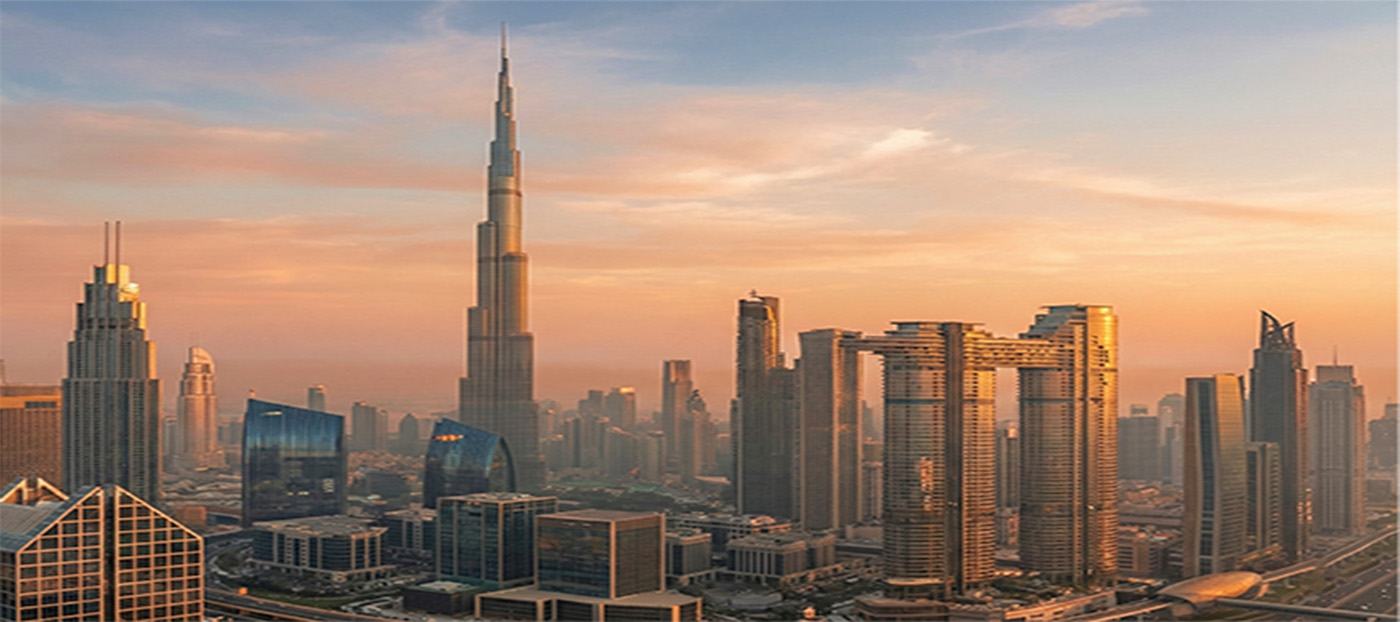
The Dubai property market steps into 2026 with a sharper identity: a maturing, data-driven landscape shaped by consistent population growth, investor confidence, and well-timed development cycles. Instead of the rapid spikes seen in past years, buyers can expect steady appreciation and stronger fundamentals.
Whether you’re exploring apartments in Motor City Dubai or emerging hotspots across the city, 2026 presents a balanced mix of capital growth and reliable rental income—backed by real estate developers in the UAE who continue to deliver high-quality, future-ready projects.
The Dubai real estate forecast for 2026 isn’t riding on hype; it’s grounded in policy, demographics, and deliberate government planning. Demand continues to outpace supply in many segments, solidifying 2026 as a milestone year where the city’s long-term growth drivers become even more visible.
Dubai’s population has been expanding at an impressive pace, with select segments experiencing nearly 9% year-on-year growth. This influx fuels continuous demand for both rental and family-oriented housing, especially in mid-market communities designed for long-term living.
The UAE’s Golden Visa program encourages long-term residency for investors and skilled professionals. Buyers benefit from stability and security, which supports sustained demand in premium, mid-market, and off-plan sectors. This policy acts as a powerful hedge against speculative volatility, strengthening the overall investment safety of buying property in Dubai 2026.
The delivery of major phases in new communities and the launch of new mega-projects will reshape the city’s map. While large-scale off-plan deliveries will temporarily boost supply, they also inject new vitality and infrastructure into surrounding areas, driving up the latent value of neighboring, existing properties.
Global economic shifts have positioned Dubai as a sanctuary for high-net-worth individuals and capital. Political stability, the zero-property-tax advantage, and world-class infrastructure continue to attract investor migration from Europe, Asia, and other key global markets, guaranteeing a strong capital inflow into the property market in the UAE.
Prices in Dubai’s real estate forecast 2026 point to moderate appreciation, with overall growth estimated at four to seven percent. This projection reflects a maturing market where demand keeps pace with new supply, avoiding the sharp rises of prior years.
Several dynamics underpin this outlook. Demand continues to outstrip supply in select segments, particularly villas and premium apartments. While 2026 will see around 120,000 units handed over, absorption rates remain robust due to population gains. Large off-plan deliveries from 2023 launches will enter the market, yet end-user buyers and investors are poised to take them up quickly. Market growth predictions suggest this balance will prevent downturns, fostering steady value increases.
Price per square foot in Dubai varies by location but averages around 1,800 dirhams for mid-range units, with upward pressure from infrastructure upgrades. Real estate inflation in the UAE hovers below global averages, thanks to controlled development. For buyers, this means entry points that offer long-term gains without excessive volatility.
Certain neighborhoods lead the charge. Jumeirah Village Circle (JVC) tops the list, with expected gains of six to eight percent, driven by its affordability and proximity to business hubs.
Dubai Hills Estate follows, appealing to families with its green spaces and schools; prices here could rise five to seven percent.
MBR City emerges as a premium contender, where master-planned communities draw high-net-worth individuals.
Arjan, in its growth phase, offers value for emerging buyers, with projections of seven percent appreciation tied to new retail additions.
Business Bay remains a commercial anchor, benefiting from office demand spillover.
Dubai Creek Harbour rounds out the hotspots, its waterfront allure supporting six percent growth.
These areas exemplify Dubai real estate trends 2026, where connectivity and lifestyle features dictate value.
High-end markets show greater stability. Palm Jumeirah holds firm with four to six percent increases, its island exclusivity limiting new builds. Dubai Marina, known for skyline views, mirrors this trajectory, attracting short-term rental operators.
Bluewaters Island sustains premium pricing through branded developments, while Tilal Al Ghaf gains traction as a suburban luxury option. In these zones, demand versus supply in Dubai tilts favorably, insulating values from broader corrections.
Rental yields in Dubai are expected to remain healthy in 2026, supported by population growth and limited alternatives for long-term renters. While yields vary by area, most established communities continue to offer returns that outperform many global cities.
Rather than focusing on precise figures, buyers should assess ROI in relative terms based on entry price, rental demand, and maintenance costs.
Community-level ROI outlook
| Area | Expected ROI Profile | Why It Performs |
| JVC | Strong | High tenant demand and accessible pricing |
| Dubai Hills Estate | Balanced | Stable family rentals and long-term appeal |
| Arjan | Improving | Growing infrastructure and rising occupancy |
| Business Bay | Moderate | Office proximity supports consistent leasing |
| MBR City | Long-term | Premium planning and capital growth focus |
Off-plan properties continue to offer an additional layer of return through capital appreciation, particularly when purchased early in well-planned developments. However, returns depend heavily on developer quality and delivery timelines
The choice between off-plan and ready property depends entirely on the investor’s financial goals and risk tolerance. Both offer distinct advantages in the 2026 market.
Off-plan property is the engine of high-potential capital growth in the Dubai property market in 2026.
Properties are typically sold at a discount to their anticipated finished market value, providing immediate paper appreciation.
Investors who buy early in a major development often realise significant capital gains upon handover, capitalizing on the transition from construction site to a vibrant community.
Developers, including major real estate developers in UAE, offer structured payment plans that require a small upfront investment, allowing the investor to leverage their capital efficiently over several years.
The high capital appreciation potential makes off-plan properties the preferred option for pure investors aiming for maximum capital gains rather than immediate rental income.
The Dubai real estate trends 2026 are defined by innovation and a push toward sustainable, integrated living. The market is evolving beyond mere luxury to prioritize liveability and technology.
New developments are integrating smart home technology, energy management systems, and community-wide AI services to enhance resident convenience and efficiency. This focus is a major factor driving demand from globally aware end-users.
Driven by the UAE’s sustainability goals, there is a distinct shift toward energy-efficient homes. Properties with lower cooling and maintenance costs are becoming increasingly attractive, aligning with global preferences for green living.
While co-living caters to the young professional segment, the larger trend is smart family living communities designed with ample green spaces, integrated schooling, and diverse recreational amenities that appeal to the mass affluent family demographic.
The collaboration between real estate developers and high-end luxury brands continues to flourish. Branded residences command a price premium and offer superior services, solidifying their status as a premium investment class.
Areas like Dubai Hills, Damac Hills, and MBR City are the preferred choice over high-rise city centres for many families. These suburban mega-communities offer space, privacy, and extensive amenities, signifying a long-term trend in Dubai’s residential landscape.
Continued geopolitical events will solidify Dubai’s position as a capital haven, guaranteeing the demand vs supply imbalance persists.
Government policy in the UAE is a primary, positive driver of the market, focusing on long-term stability and ease of doing business.
Any further streamlining or expansion of the Visa criteria will immediately boost investor confidence and demand, particularly for the mid-to-high-value segment of apartments in Motor City and other family-centric communities.
While the core structure is stable, any subtle enhancements to freehold ownership or leasing regulations will improve transparency and increase the appeal to institutional investors.
Dubai’s continued commitment to a zero-property tax environment for income-generating properties is arguably its single greatest competitive advantage, guaranteeing strong net rental yields.
Major infrastructure projects—such as new metro lines, airport expansion, and the development of mega zones—are not just transport improvements; they are massive catalysts for real estate value, immediately boosting the value of properties in newly connected corridors.
Selecting the right community is paramount. The optimal choice depends on the buyer’s objective: capital appreciation, immediate yield, or end-user lifestyle.
These areas offer the best balance of lower entry points, high rental yields, and strong capital appreciation potential.
These communities are designed for long-term residency, focusing on space, safety, and amenities.
These communities represent the pinnacle of Dubai real estate, offering unique, limited-supply assets.
For investors, 2026 represents a compelling opportunity to lock in appreciating assets, particularly in high-growth, mid-market communities like JVC and Arjan, or in communities such as Motor City Dubai that provide a proven balance of yield and value. For end-users, the market provides security and world-class living in master-planned environments. The time to secure a stake in the city’s robust future is now.
1. Will Dubai property prices rise in 2026?
Yes, Dubai property prices are widely expected to rise in 2026 in select segments, but overall market growth may be tempered or even dip slightly in 2026.
2. Which areas will give the best ROI in 2026?
Areas offering the best ROI in 2026 are primarily high-demand, mid-market communities with strong rental demand. Jumeirah Village Circle (JVC) and Arjan are forecast to provide the highest rental yields and capital appreciation, while established areas like Business Bay and Motor City Dubai offer predictable, high-occupancy returns.
3. Is 2026 a good year to invest in Dubai real estate?
Yes, 2026 is considered an excellent year to invest in Dubai real estate. The market is supported by strong, sustainable fundamentals, including government policies like the Golden Visa, zero-tax on rental income, and significant infrastructure expansion, all of which mitigate risk and promote long-term value growth.
4. What type of property performs best in 2026?
In 2026, well-located luxury and premium properties are expected to perform best in Dubai, particularly villas and branded residences. Homes in established communities with strong amenities, limited supply, and high-end user demand are likely to maintain better price stability and rental returns than oversupplied mid-market units.
5. Will rents go up in Dubai in 2026?
Rental prices in Dubai are expected to maintain an upward trajectory in 2026, albeit at a more moderate pace than in recent years. The strong influx of new residents and limited supply of new properties ready for occupancy will continue to place pressure on the 2026 rental return Dubai.
6. What is the property market forecast for 2026 in Dubai?
Dubai’s property market in 2026 is expected to stabilize after rapid growth, with moderate price movement across most segments. Luxury properties are likely to remain strong, while some mid-market areas may experience slight corrections due to new supply, which will help keep overall demand healthy and balanced.
7. What is the forecast for Dubai real estate for the next 5 years?
The forecast for Dubai real estate over the next five years is exceptionally strong. It is projected to be a period of sustainable, moderate growth, underpinned by the ambitious Dubai 2040 Urban Master Plan, continued population influx, and the city’s growing status as a global financial and lifestyle hub.
8. Are Dubai property prices coming down?
No, the overall trend for Dubai property prices is not coming down. While price growth may moderate from the sharp increases seen in earlier years, a price correction is unlikely in 2026 due to the fundamental strength of demand, global capital inflows, and the government’s commitment to market stability.